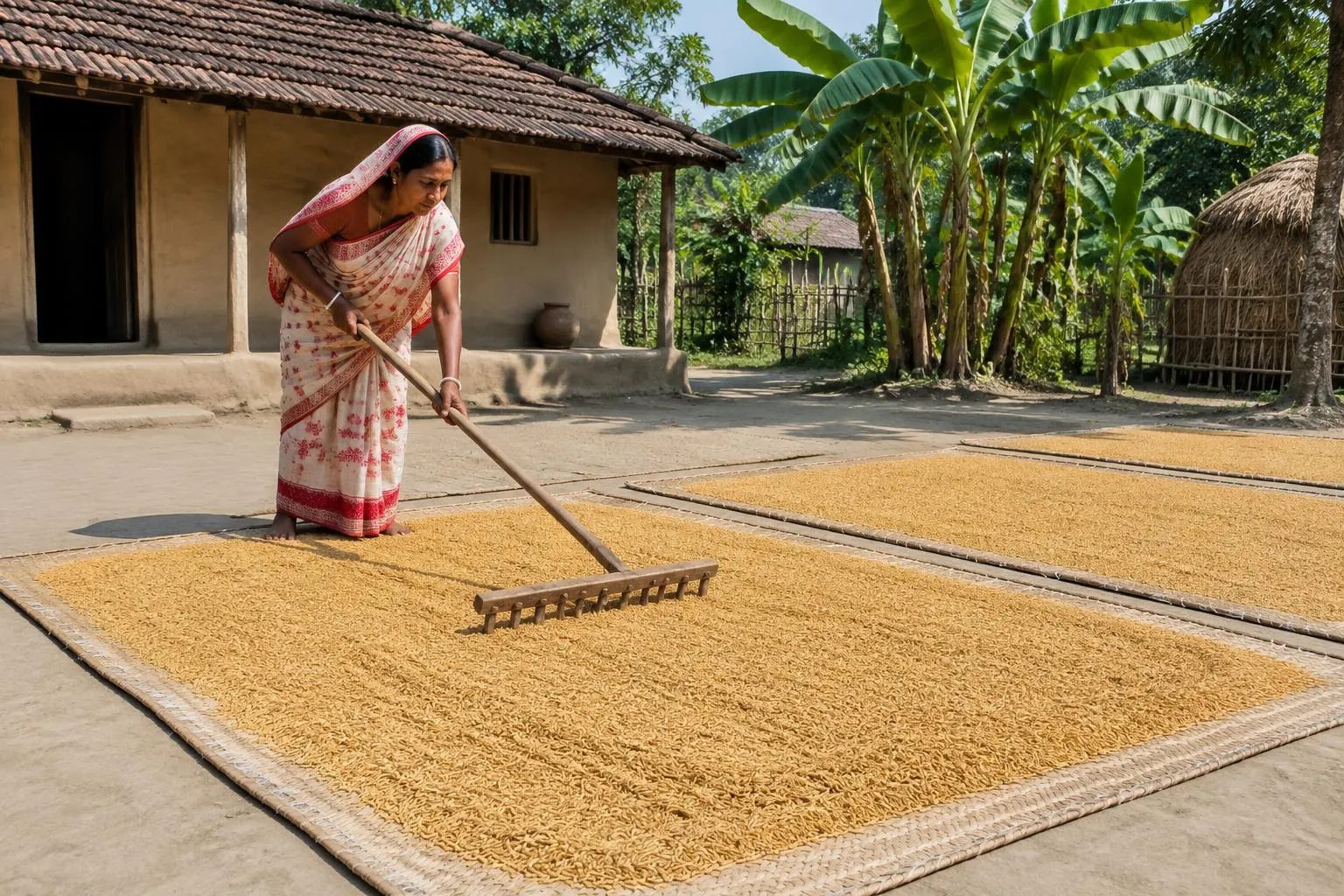
Traditional Village-Processed Parboiled Rice
A Rare Taste of Bengal. A Tradition Unlike the Ordinary.Made by a Few. Preserved Through Generations.
A Rare Traditional Parboiled Rice, Crafted by a Small Community of Skilled Artisans in Rural Bengal, India.
Images are illustrative depictions inspired by rural Bengal. They are not photographs of SKBhandar's own facilities, producers or suppliers.
The Story
Not every tradition survives the passage of time.
In a few rural communities of Bengal, a distinctive traditional method of parboiled rice preparation continues to be practised by people who have inherited this knowledge through generations.
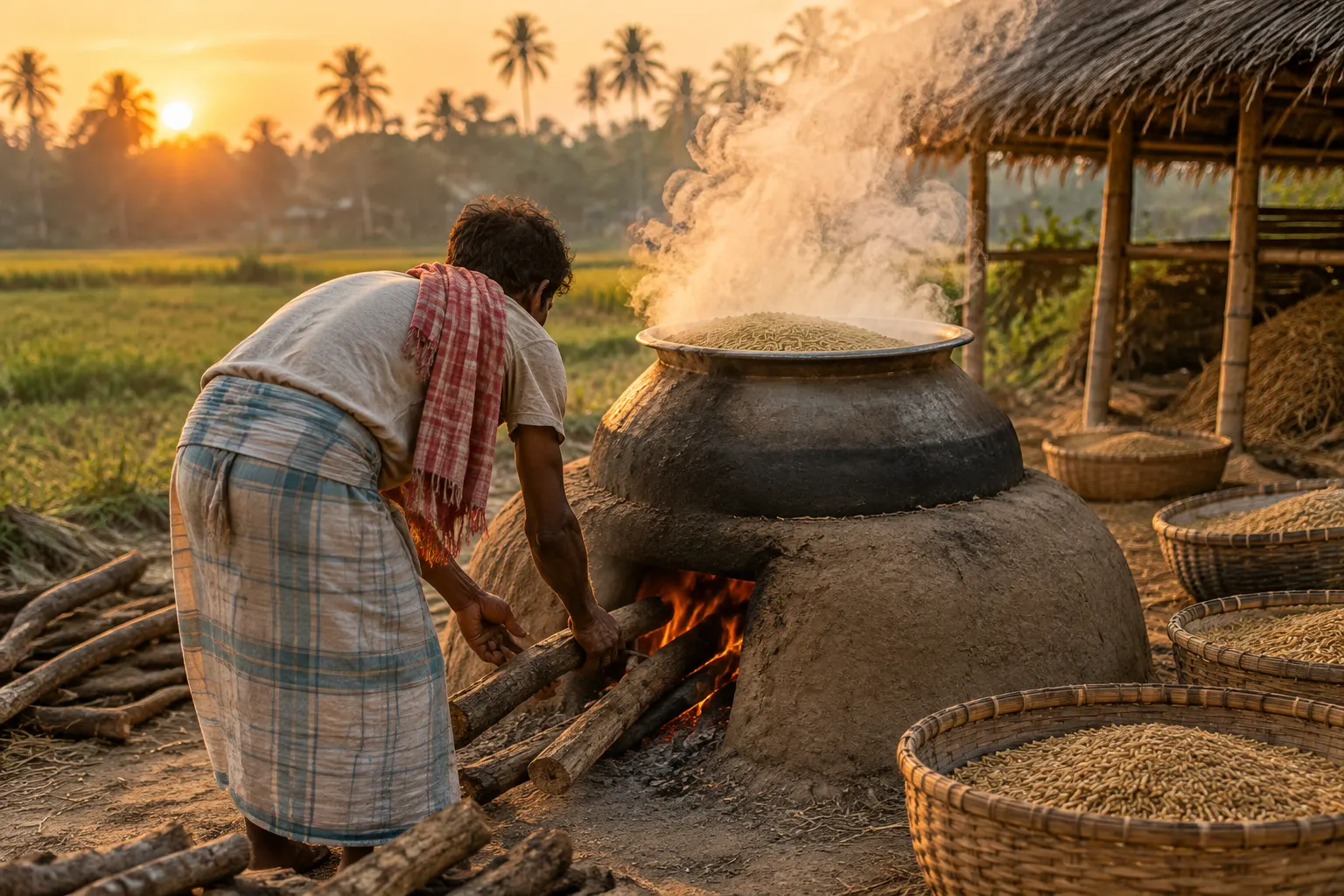
Unlike conventional large-scale industrial processing, this method involves soaking paddy for approximately 24 hours in traditional clay vessels, steaming it using a traditional village oven, spreading the steamed paddy over traditional Madur Kathi woven grass mats for natural sun-drying, and repeating the steaming and sun-drying process once more before the paddy is finally milled into rice.
The use of Madur Kathi mats during sun-drying creates a meaningful connection between Bengal's traditional rice processing and its heritage of handwoven grass mats. This is more than a rice-processing method. It represents generations of traditional knowledge, rural craftsmanship and Bengal's agricultural heritage.
At SKBhandar, we aim to bring this distinctive traditional rice to international markets while preserving the story and identity behind its production.
The Six-Stage Traditional Method
From clay vessel to finished grain
Two separate steamings. Two separate sun-dryings on Madur Kathi mats. One final milling.
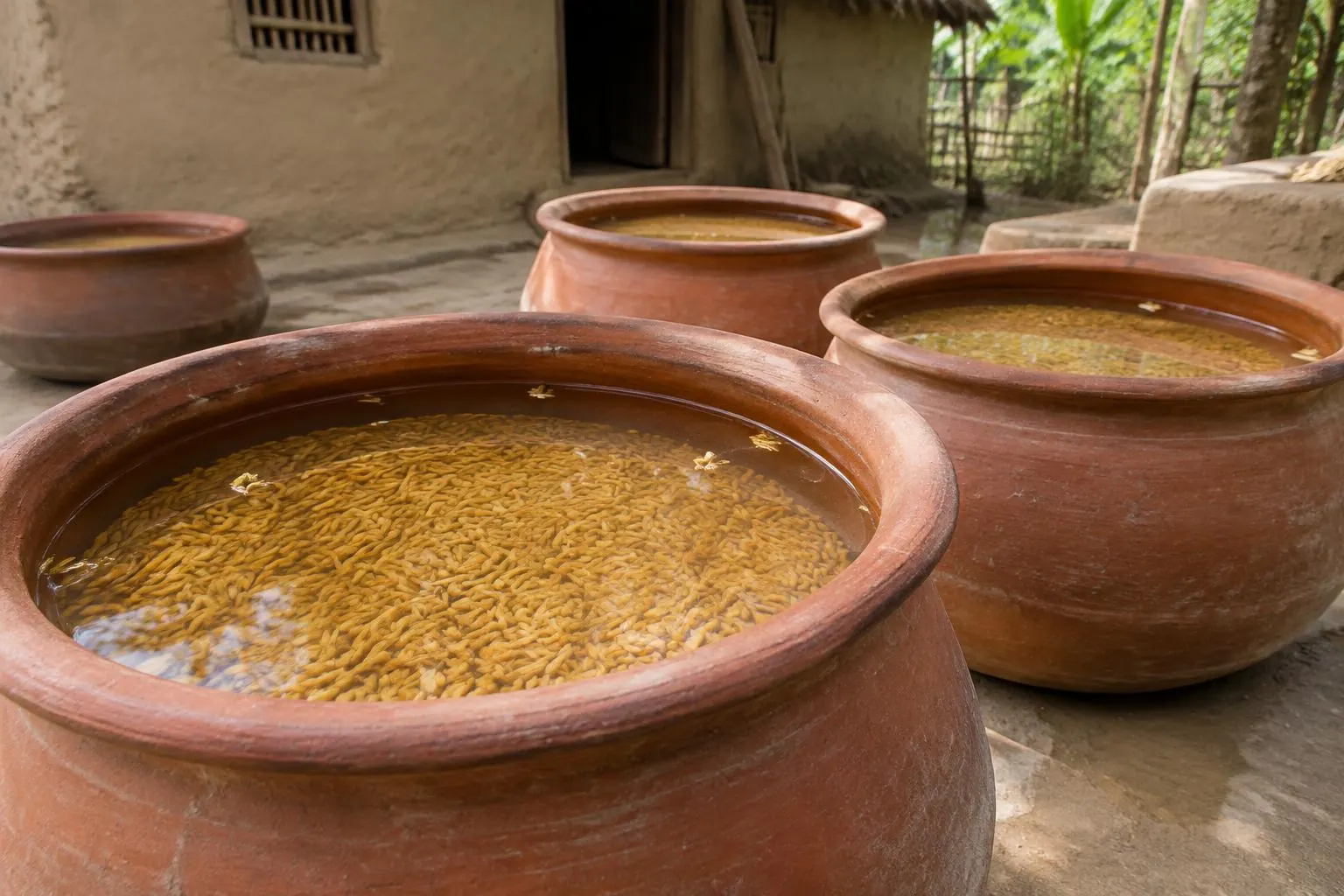
Stage 01 of 06
Traditional Soaking
Paddy is soaked for approximately 24 hours in traditional clay vessels.
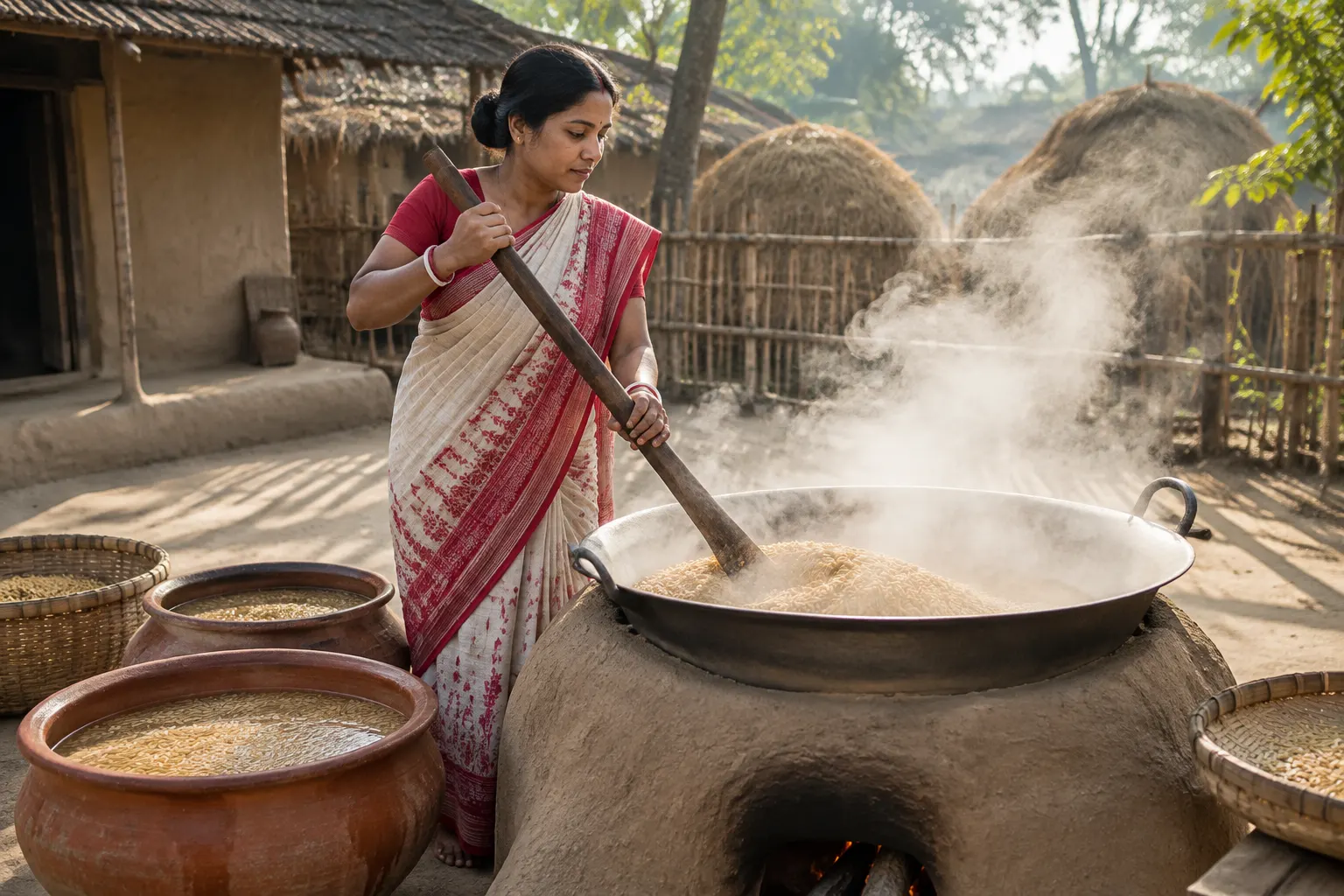
Stage 02 of 06
First Village-Oven Steaming
The soaked paddy is steamed using a traditional village oven.
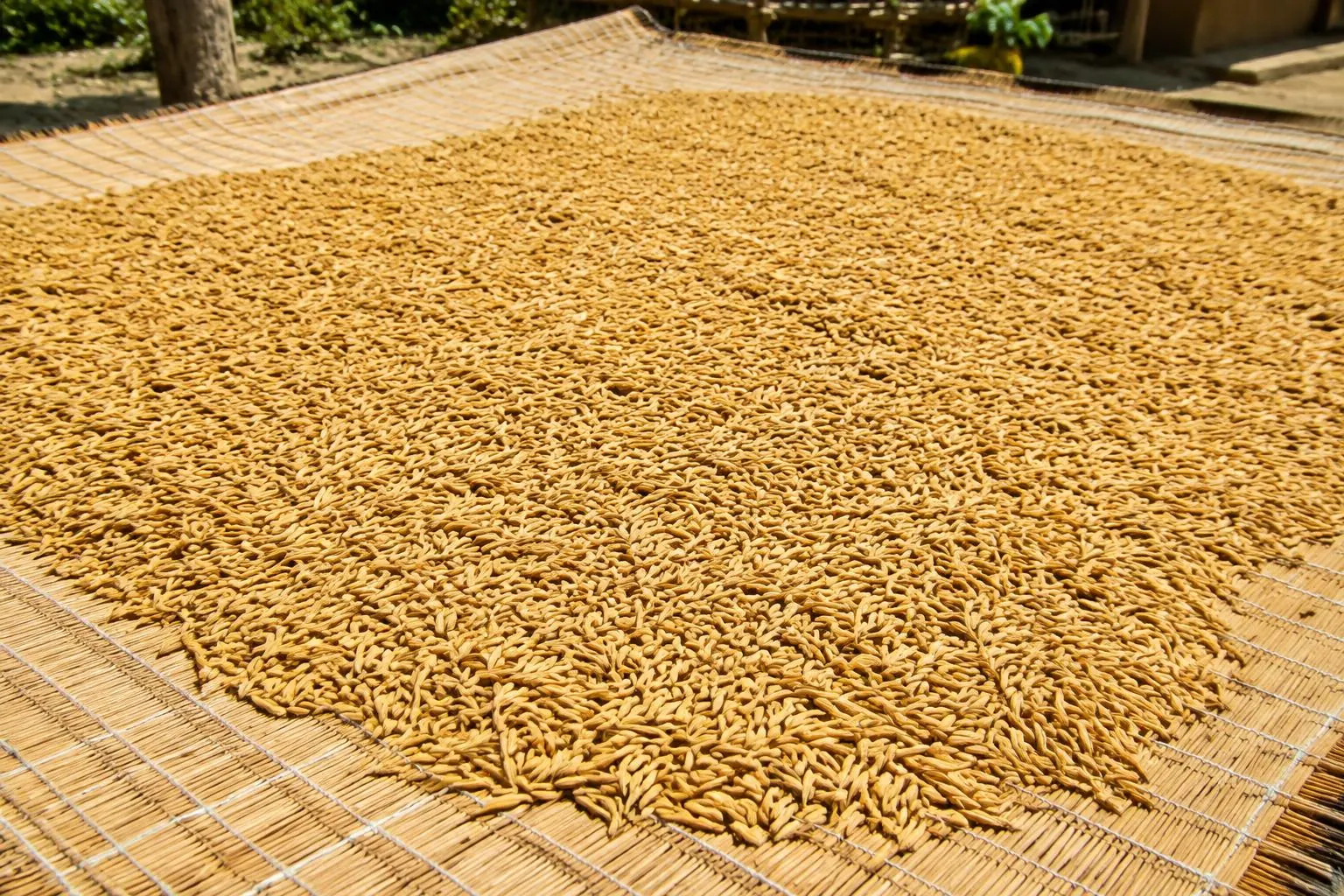
Stage 03 of 06
First Natural Sun-Drying on Madur Kathi Mats
The steamed paddy is spread over traditional Madur Kathi woven grass mats and dried naturally under the open sun.
The paddy rests directly on handwoven Madur Kathi grass mats — never on plastic sheets, tarpaulin or concrete.
Stage 04 of 06
Second Village-Oven Steaming
After the first sun-drying, the paddy undergoes a second round of steaming using the traditional village-oven method.
Stage 05 of 06
Second Natural Sun-Drying on Madur Kathi Mats
The paddy is spread over Madur Kathi woven grass mats again for a second round of natural sun-drying.
The paddy rests directly on handwoven Madur Kathi grass mats — never on plastic sheets, tarpaulin or concrete.
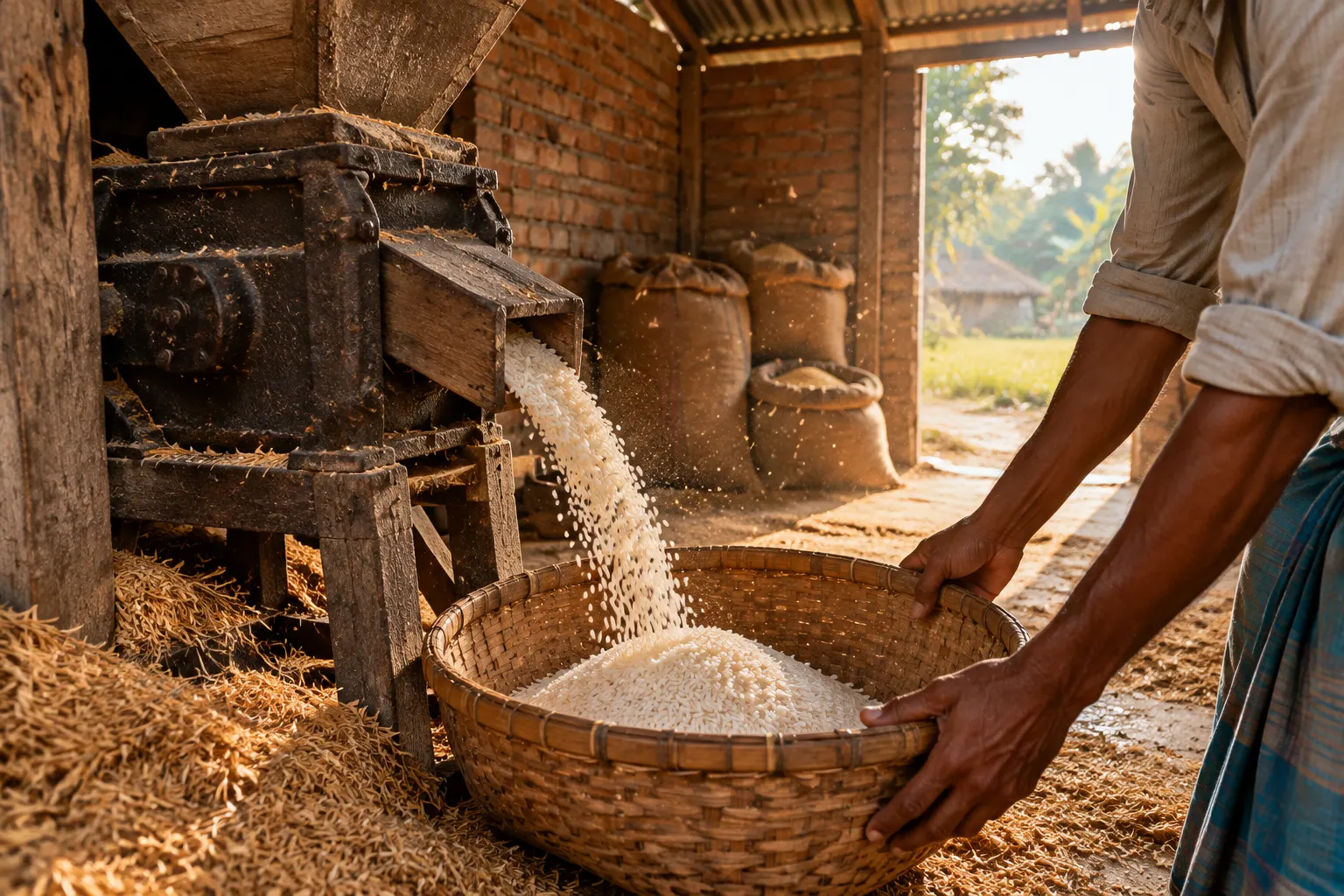
Stage 06 of 06
Final Milling
Once the second drying stage is complete, the processed paddy is milled to produce the finished rice.
Images are illustrative depictions inspired by rural Bengal. They are not photographs of SKBhandar's own facilities, producers or suppliers.
Illustrative image.
Madur Kathi
Two crafts of Bengal, woven together
Madur Kathi is a reed grass traditionally woven into mats in Bengal. In this method, the steamed paddy is spread directly on these handwoven mats to dry in the sun — in both drying stages.
The practice links Bengal's traditional rice processing with its heritage of handwoven grass mats. It is a small detail, and an essential one: it is part of what makes this rice a product of a place and its people.
For International Buyers
What makes this method distinctive
How traditional village processing differs from conventional large-scale industrial parboiling.
- 01
Clay vessels, not steel tanks
Paddy is soaked for approximately 24 hours in traditional clay vessels rather than industrial soaking tanks.
- 02
Village ovens, not boilers
Steaming is done over a traditional village oven, tended by hand, instead of industrial steam boilers.
- 03
Sun and Madur Kathi mats, not dryers
The paddy dries naturally under the open sun on handwoven Madur Kathi grass mats — a craft heritage of Bengal in its own right.
- 04
Done twice, by a few
Steaming and sun-drying are each carried out twice, by a small community who inherited this knowledge through generations.
Bring It to Your Market
Interested in this rice?
Tell us about your market, volumes and packaging needs. Grade, specification and supply availability are confirmed per enquiry.